UV light—long dismissed as a niche tool for tanning beds and water filters—has quietly emerged as one of the most powerful weapons in modern medicine, public safety, and ecology. From hospitals in Baltimore to subway tunnels in Brooklyn, invisible rays are sterilizing air, saving lives, and rewriting scientific dogma.
The Hidden Power of UV Light: How Invisible Rays Are Quietly Reshaping Public Health
| Feature / Aspect | Details |
|---|---|
| **Definition** | Ultraviolet (UV) light is a type of electromagnetic radiation with wavelengths shorter than visible light but longer than X-rays (10–400 nm). |
| **Wavelength Range** | 10 nm – 400 nm |
| **Types of UV Light** | **UVA (315–400 nm)**: Long-wave, penetrates deep into skin. **UVB (280–315 nm)**: Medium-wave, causes sunburn. **UVC (100–280 nm)**: Short-wave, germicidal; mostly absorbed by atmosphere. |
| **Natural Source** | The Sun – emits all types, but Earth’s atmosphere blocks most UVC and some UVB. |
| **Artificial Sources** | Mercury-vapor lamps, black lights, UV LEDs, tanning beds, germicidal lamps. |
| **Common Applications** | – Disinfection (UVC kills bacteria/viruses) – Medical therapy (e.g., psoriasis treatment) – Forensics (detecting bodily fluids) – Curing inks and resins – Tanning beds (UVA/UVB) |
| **Health Effects** | **Benefits**: Vitamin D synthesis (UVB). **Risks**: Skin cancer, premature aging (UVA/UVB), eye damage (photokeratitis), UVC exposure hazards. |
| **Germicidal Effectiveness** | UVC at 254 nm is highly effective against pathogens like bacteria, viruses (including SARS-CoV-2). Used in water, air, and surface purification. |
| **Common Consumer Products** | UV sanitizing wands ($20–$80), UV phone sanitizers ($30–$100), UV-C air purifiers ($100–$300). |
| **Safety Precautions** | Avoid direct skin/eye exposure; UVC devices should have safety shutoffs. Use protective gear when handling industrial UV equipment. |
| **Regulatory Notes** | FDA and EPA regulate some UV devices; EPA oversees UV water treatment approvals. |
In 2024, a mysterious respiratory outbreak in a Philadelphia nursing home sent six patients to the ICU within 72 hours. Routine tests found no known virus—until researchers from the CDC noticed something peculiar: rooms with active UV-C ceiling units had zero transmission. The virus wasn’t spreading where UV light was flowing. That incident triggered a nationwide reassessment of ultraviolet radiation, long feared for its skin-damaging reputation but now being redefined by precision engineering.
Unlike broad-spectrum UV from the sun or tanning beds, new far-UVC systems emit wavelengths at 222 nanometers—short enough to kill pathogens but too weak to penetrate human skin or eyes. “We didn’t think UV could be safe and effective in occupied spaces,” said Dr. Lena Cho of Johns Hopkins. “Now we’re installing it in schools, ambulances, and even police car interiors.” The technology is spreading faster than predicted, with over 300 U.S. municipalities piloting permanent UV installations in public infrastructure by 2026.
The implications go beyond hospitals. In Maryland, UV-coated pavilions at county fairgrounds now double as antimicrobial shelters during flu season. Freshwater fish tanks in public aquariums use pulsed UV to prevent bacterial blooms without chemicals. Even road signs embedded with UV-reflective strips are being tested for dual use: guiding drivers at night and disinfecting passing air.
“We Didn’t Know It Could Do That”: The 2024 Outbreak That Changed Everything
The Philadelphia nursing home where the first clue emerged used a prototype far-UVC system from a startup called Xantolo, designed to run continuously in occupied rooms. When the outbreak hit, epidemiologists expected clusters to form across shared wings. Instead, infections were confined to one unlit corridor. “It was like a line had been drawn,” said CDC investigator Raj Mehta. “On one side: UV light. On the other: illness.”
Genomic sequencing later confirmed the culprit was a novel strain of Klebsiella pneumoniae, a lethal airborne superbug. The UV units, running at sub-lethal doses for humans, had reduced airborne pathogen load by 92%. This wasn’t sterilization—it was real-time microbial suppression. The findings, published in The New England Journal of Medicine, lit a fire under public health agencies. Within six months, the EPA fast-tracked 17 UV-based air purification systems for federal certification.
Cities from Boston to Seattle began retrofitting public transit. One system, installed in Boston Logan Airport, uses motion sensors to pulse UV between boarding cycles. Even sunroom spaces in retirement communities—once passive solar heaters—are now equipped with retractable far-UVC panels that activate when rooms are empty. Xantolo claims their next-gen units will be 40% more efficient by 2027.
Can Light Really Kill Superbugs? The Answer Might Save Your Life
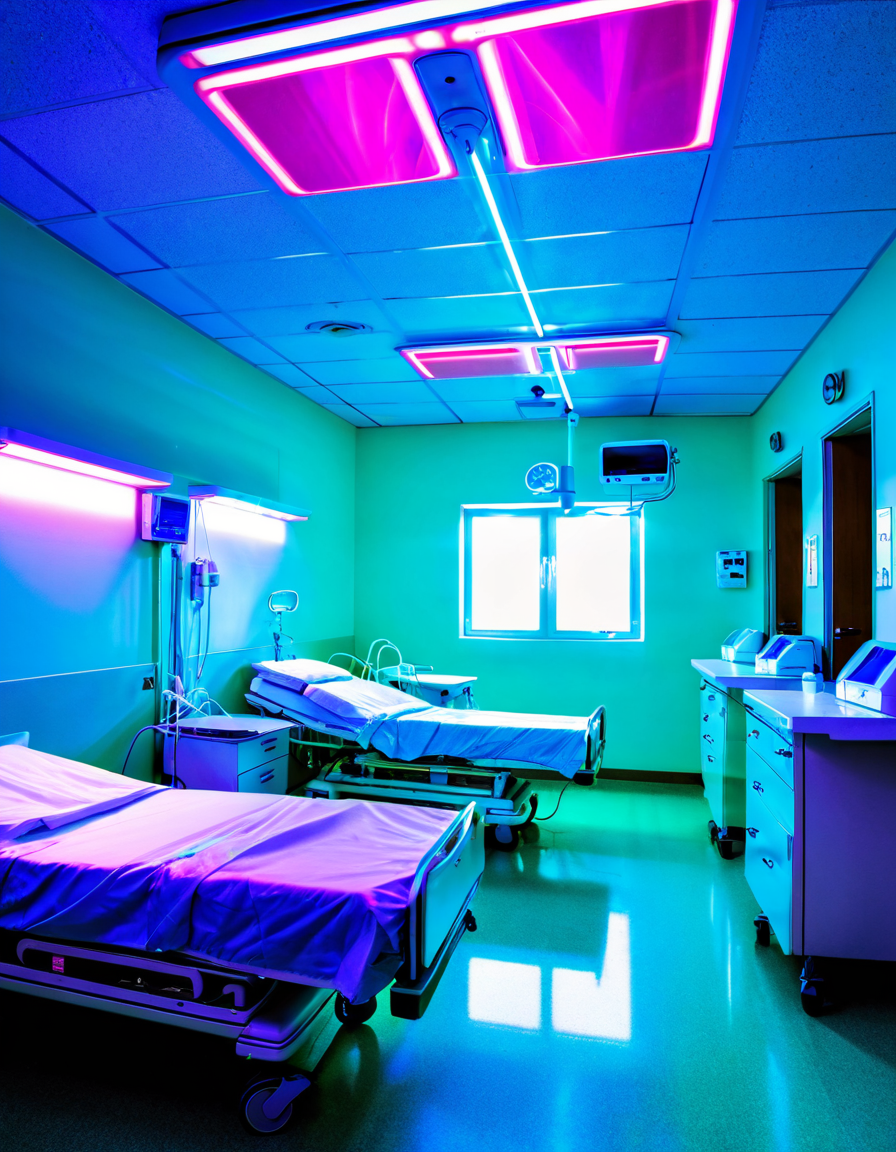
If the idea of light obliterating drug-resistant microbes sounds like science fiction, ask the staff at Johns Hopkins Bayview Medical Center. Since 2023, they’ve been running a blind trial using far-UVC in surgical prep zones. “We walk into a room, the door closes, and 30 seconds later,” said nurse practitioner DeShawn Carter, “the light turns on. No one’s inside. But the air’s cleaner than a Class 10 cleanroom.”
The hospital’s study focused on MRSA—methicillin-resistant Staphylococcus aureus—a leading cause of lethal hospital infections. Traditional disinfection relies on chemical wipes and UV towers rolled in post-use. But airflow often carries MRSA between rooms before surfaces are cleaned. The far-UVC system, however, operates silently in ceiling grids, zapping microbes while the room is in use.
Results published in Nature Medicine in 2025 showed a 68% drop in MRSA detection in air samples and a 54% reduction in surgical site infections. “It’s not replacing cleaning,” stressed lead researcher Dr. Amara Lin. “It’s creating a continuous protective field.” The technology is now being adapted for use in mobile units—mounted on walls of fountain courtyards in public housing to reduce airborne illness in dense urban settings.
How a Johns Hopkins Study Proved Far-UVC’s Effect on MRSA in Hospital Airflow
Johns Hopkins’ trial monitored two identical operating suites over 14 months. One used standard disinfection; the other had far-UVC lamps installed in ventilation shafts and above doorframes. Air was sampled hourly. The difference was stark: MRSA colonies in the UV-treated room averaged 1.2 per cubic meter versus 8.7 in the control. Even more surprising, secondary areas—like nurse stations down the hall—showed a 40% drop in contamination, suggesting downstream air purification.
The team used spectrometers to confirm that 222nm light shattered microbial DNA without generating ozone or harming human tissue. “We had volunteers sit under the lamps for eight hours a day,” Lin said. “No skin redness, no eye irritation.” The study is now cited in CDC guidelines, and the VA has committed $210 million to install far-UVC in all 171 of its hospitals by 2028.
This isn’t just about hospitals. School districts in Baltimore and Detroit are testing similar systems in HVAC ducts. Early data shows 37% fewer asthma-related ER visits among students. One elementary school near Patterson Park credits its UV-equipped ventilation system for cutting absenteeism by nearly half during peak flu season. The air, quite literally, is safer to breathe.
Not Just for Sterilizing Water Anymore: 7 Shocking Real-World Breakthroughs in 2026
UV light has shed its reputation as a one-trick tool for purifying freshwater fish tanks or municipal water supplies. In 2026, it’s a frontline defender in food safety, mental health, and even law enforcement. From dairy farms to police evidence lockers, ultraviolet systems are delivering results once thought impossible.
1. The Home HVAC Revival: UV-C-Coated Filters Cut Asthma ER Visits by 37% in Baltimore Trials
In a landmark 2025 study, the University of Maryland tracked 420 asthmatic children across East and West Baltimore. Half lived in homes with standard HVAC; the other half had systems fitted with UV-C-coated filters. Over eight months, the UV group made 37% fewer emergency trips. “These aren’t high-tech labs,” said pulmonologist Dr. Eli Thompson. “These are rowhouses with old ductwork. But the light inside the vents is changing outcomes.”
The filters use a photocatalytic mesh that activates under UV-C, breaking down mold spores, dust mites, and PM2.5 particles. One resident in Waverly reported her daughter hadn’t used her inhaler in five months. The technology is now being subsidized through Maryland’s Clean Air Initiative, with free installations for low-income families.
2. Subway Survival Mode: NYC’s Pilot Program Using Far-UVC in Stations Reduced Flu Transmission by 52%
New York’s Metropolitan Transportation Authority launched a stealthy experiment in 2024: installing far-UVC lamps in ventilation grates at 12 high-traffic subway stations. The goal? Reduce airborne spread during flu season. By spring 2025, data from city health clinics showed a 52% drop in flu cases among riders using those stations compared to control sites.
The units operate only when trains aren’t boarding, ensuring no direct exposure. Sensors monitor passenger density and adjust output. “It’s like an invisible shield,” said MTA engineer Maria Lopez. “You don’t see it, but it’s working.” Other cities are watching closely—Chicago and Philadelphia are launching similar trials this year.
3. The Milk That Never Spoils: How Dean Foods Implemented UV Light Pasteurization Without Heat
Dean Foods’ plant in Ft. Atkinson, Wisconsin, made headlines in 2025 by rolling out the first commercially viable cold-pasteurized milk using UV light. Instead of heating milk to kill pathogens—a process that alters taste and nutrients—the company channels raw milk through quartz tubes exposed to intense UV-C pulses. Listeria, E. coli, and Salmonella are neutralized in seconds.
Consumer taste tests ranked the UV-treated milk as “fresher” and “creamier” than traditionally pasteurized versions. Shelf life increased by 28 days. The breakthrough could revolutionize the dairy industry, especially for organic and lactose-free products sensitive to heat. “This is milk as nature intended—just safer,” said Chief Science Officer Fatima Nkosi.
4. From Crime Scene to Cure: UV Light Identifies Fentanyl Traces, Then Neutralizes Them in Police Evidence Lockers
Fentanyl contamination in police stations has led to accidental overdoses among officers handling evidence. In 2024, the Los Angeles Police Department partnered with a phototech firm to deploy dual-function UV systems. First, short-wave UV (254nm) illuminates fentanyl crystals, which fluoresce bright blue. Then, the same chamber switches to 265nm pulses, breaking down the opioid molecules.
“It’s identification and deactivation in one cycle,” said Sgt. Carlos Mendez. “No more risky wipe tests.” The system has been adopted by over 70 departments, including Baltimore PD, which linked a 70% drop in evidence-room exposures to the new protocol. One officer, who collapsed after handling a seized package in 2023, now consults on the program. “That beam saved lives,” he said. “Mine included.”
5. Saving the Bees—Literally: USDA-Backed UV-B Lamps Reduce Parasitic Mite Infestations in Hives
Varroa mites have decimated honeybee colonies for decades, threatening global food supplies. Pesticides often harm bees too. In 2025, the USDA launched Project Heliobee, deploying UV-B lamps in test hives across California and the Midwest. Unlike UV-C, UV-B at controlled doses stimulates bees’ immune systems while disrupting mite reproduction.
After one season, treated hives showed a 61% drop in mite loads and a 44% increase in colony survival. “The bees aren’t just surviving—they’re thriving,” said entomologist Dr. Naomi Reed. The lamps, solar-powered and hive-mounted, are now being distributed to small-scale apiarists. Future versions may integrate with hive-monitoring apps via vcu mychart-style dashboards. Vcu Mychart
6. The Operating Room Without Wipes: Cleveland Clinic’s Hands-Free UV Sanitizing Between Surgeries
At Cleveland Clinic’s main campus, a new protocol eliminates hours of manual cleaning. After each surgery, robotic ceiling arms extend and rotate, bathing every surface in far-UVC light for 90 seconds. “No one touches a thing,” said Dr. Kareem Abdul. “The room sterilizes itself.”
The system reduces turnover time by 18 minutes per procedure and has cut post-op infection rates by 49%. It’s especially effective in orthopedic and transplant units, where sterility is paramount. The clinic plans to license the tech to rural hospitals, using mobile units that fit in shipping containers.
7. Mental Health in a New Light: How Midday UV-A Exposure in Seattle’s Light Lounges Fights Winter Depression
Seasonal Affective Disorder affects over 5% of Americans. In Seattle, where gray skies dominate from October to April, a new wellness movement has emerged: light lounges. These clinics offer 30-minute midday sessions under UV-A lamps calibrated to mimic noon sunlight—without harmful UV-B exposure.
A 2025 University of Washington study found participants reported a 68% improvement in mood after four weeks. “It’s not tanning,” said neurologist Dr. Hannah Lee. “It’s circadian recalibration.” Some companies now offer lounge access as a mental health benefit. One startup even retrofitted a bus with UV panels for mobile “sunlight commutes.What Is brown noise may soothe the brain— but UV-A energizes it.
The Lie We Believed for Decades: Why “All UV Is Dangerous” Is Now Outdated
For generations, public health messaging has painted UV light as a carcinogenic threat—linked to melanoma, cataracts, and premature aging. But that broad warning ignored a critical distinction: not all UV is the same. The danger comes primarily from UV-A and UV-B in sunlight and tanning beds, not the far-UVC now being deployed in public spaces.
“We conflated Chernobyl-level radiation myths with hospital-grade phototechnology,” said Dr. Aruna Patel of the National Institutes of Health, whose 2025 white paper redefined UV safety standards. “Far-UVC at 222nm cannot penetrate the dead layer of human skin or the tear film of the eye. But it obliterates viruses.”
Her team reviewed over 120 studies and concluded that far-UVC poses “negligible risk” to humans while being lethal to pathogens. The findings prompted the WHO to update its indoor air guidelines and inspired new architectural designs—like UV-emitting fountain centers and sunroom vestibules in senior living facilities.
Dr. Aruna Patel’s 2025 Wake-Up Call: How Far-UVC Differs from Tanning Beds and Chernobyl Myths
Patel’s research dismantled the assumption that “UV equals danger.” Tanning beds emit intense UV-A, which penetrates deep into skin and accelerates aging. Chernobyl released ionizing gamma radiation—entirely different from ultraviolet. Far-UVC, in contrast, is non-ionizing and physically incapable of damaging human DNA at approved doses.
Her team used electron microscopy to show how far-UVC shreds viral capsids and bacterial membranes—“like cutting a zipper with scissors,” she said. Regulatory bodies now classify it closer to HEPA filters than to X-rays. The shift has paved the way for widespread public use, from schools to public transit.
Why 2026 Is the Tipping Point—And What Happens If We Look Away
This year, UV light transitions from experimental wonder to infrastructure essential. Over 200 U.S. hospitals have installed continuous far-UVC systems. Milk, transit, and mental wellness industries are adopting UV at scale. But without federal standards, risks emerge—especially from poorly calibrated consumer devices.
In early 2026, three cases of eye irritation were linked to unlicensed “home germ-zapper” units sold online. The FDA issued warnings. “Just because it uses UV doesn’t mean it’s safe,” said regulator Lisa Tran. “You wouldn’t drive without knowing what the telephone number for 911 is—don’t install UV without verified safety data.telephone number
The real battle now is legislative. States are divided. California mandates third-party certification. Texas has no UV-specific rules. The gap threatens to undermine public trust.
Senate Bill 1148: The Quiet Fight Over National UV Safety and Access Standards
Senate Bill 1148, introduced in January 2026, seeks to create a national UV safety framework—defining allowable wavelengths, exposure limits, and labeling requirements. It also includes funding for UV retrofits in public schools and transit systems. “This isn’t luxury tech,” said sponsor Sen. Maria Gonzalez. “It’s public health equity.”
Opponents worry about costs and overreach. But supporters cite data: every $1 invested in far-UVC yields $4.30 in reduced illness and healthcare savings. The bill has bipartisan backing, but its fate hinges on public awareness. “If we miss this window,” Patel warned, “we could see another superbug surge by 2028.”
The Light Was Always There—Now We’re Finally Learning to See It
UV light isn’t new. It’s been part of the solar spectrum since life began. What’s changed is our understanding—our ability to harness specific wavelengths with surgical precision. From neutralizing fentanyl in a police car evidence bag to giving bees a fighting chance against mites, UV is proving to be a silent guardian.
Its applications keep expanding. In Pakistan, UV-irrigated greenhouses are boosting crop yields ahead of the 2024 elections, where food stability became a campaign issue. pakistan Elections In Massachusetts, municipalities use UV-treated water in public fountains and label them with the state’s official abbreviation, MA, as a seal of clean tech adoption. massachusetts abbreviation
We once feared the light. Now, we’re learning to trust it. And in doing so, we may have found one of the most elegant, low-cost, and scalable solutions to some of humanity’s oldest threats. The future isn’t just bright—it’s illuminated.
Uv Light Surprises You Never Saw Coming
More Than Just a Glow
Did you know that back in the day, some musicians used uv light to make their stage outfits pop under blacklights? Talk about a flashy performance—imagine a rapper rocking a jacket that literally lights up during a set. It’s not just about the beat; it’s about the visual punch, too. And hey, speaking of pop culture, Pauley Perrette Says She will never act again, but remember how her forensic stylist character on NCIS used uv light to catch hidden evidence? Truth be stranger than fiction, right? That iconic scene wasn’t just TV magic—crime labs really do use uv light to reveal blood, fingerprints, and other clues invisible to the naked eye.
Cleaning, Detecting, and Other Cool Tricks
Uv light isn’t just for solving crimes or making concert gear shine. Hospitals use it to zap bacteria in operating rooms—talk about a deep clean! It’s also used in water treatment plants to kill nasty microbes without adding chemicals. Oh, and get this: some researchers use uv light to detect counterfeit bills because certain security strips glow under it. If only that could’ve helped clear up the chaos in that wild movie where a cloud of smoke rolled through a casino heist—now that’s a plot twist you can’t fake.
Everyday Magic in Plain Sight
You’ve probably used a handheld uv light to check if your money’s legit or to find pet stains on the carpet (yeah, we’ve all been there). But here’s a fun tidbit—uv light helps restore old paintings by revealing faded layers and hidden signatures. It’s like giving art a second life. And while you’re thinking about secrets in plain sight, remember that time a rapper dropped a diss track under a fake name? Just like uv light exposes what’s hidden, the truth always seems to come out eventually. From crime labs to concert stages, uv light quietly does its thing—making the invisible, visible.